

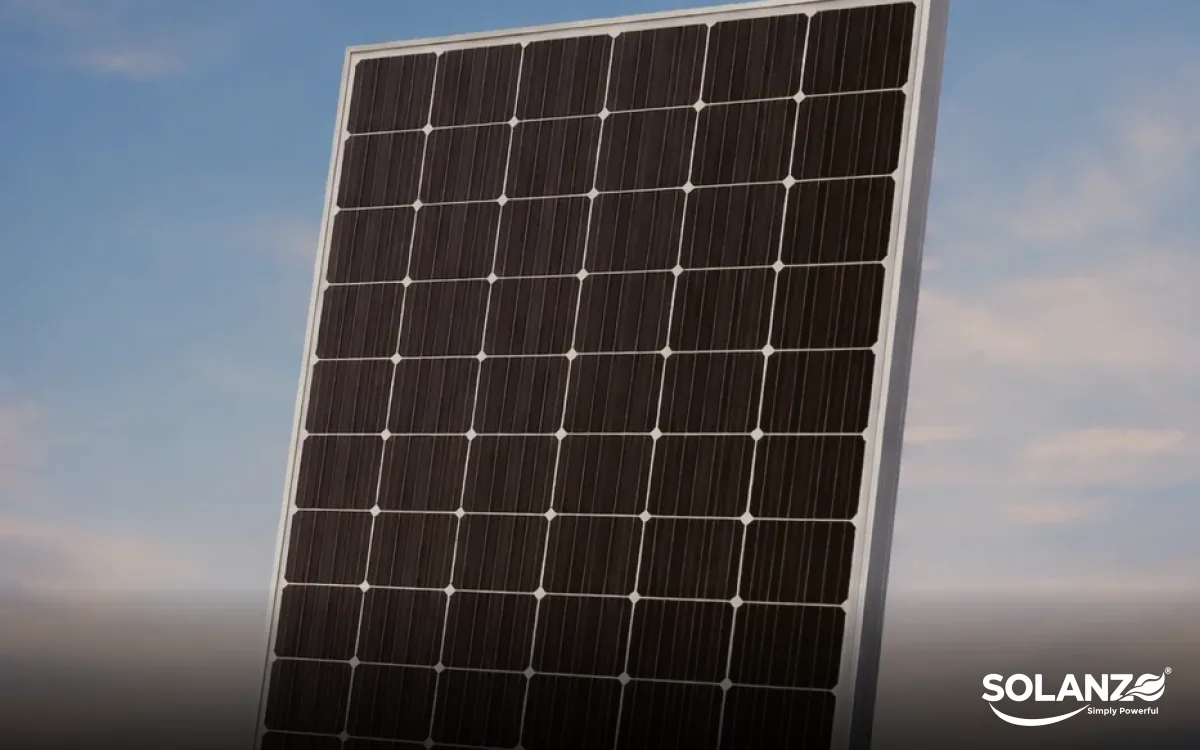
Open a module datasheet this year and the architecture has changed again: cells are being laser-cut in half and wafers have grown a size. It sounds like manufacturing trivia, but the consequences land directly on field output.
Why cutting cells in half helps
Current flowing through a cell generates resistive losses proportional to the current squared. Halve the cell and you halve the current path, cutting those internal losses to a quarter. The gain is a few percentage points of real output, recovered from physics rather than marketing.
The wiring change matters just as much in the field: half-cut modules split the panel into independent halves. Shade covering the bottom of the module, a passing cloud edge, a parked vehicle, knocks out only part of the panel instead of dragging down the whole string. On agricultural sites with real-world shading, that partial-shade resilience is worth more than the headline efficiency.
Bigger wafers, honest trade-offs
Larger cell formats squeeze more watts per module and reduce cost per watt, but the panels themselves have grown. A bigger module on a pumping array is fine; on a roof or a retrofit frame, check the dimensions before assuming the new wattage fits the old rails.
Efficiency improvements used to arrive in fractions of a percent. The half-cut generation has delivered whole points, which is why it moved from premium to standard product within two years.