

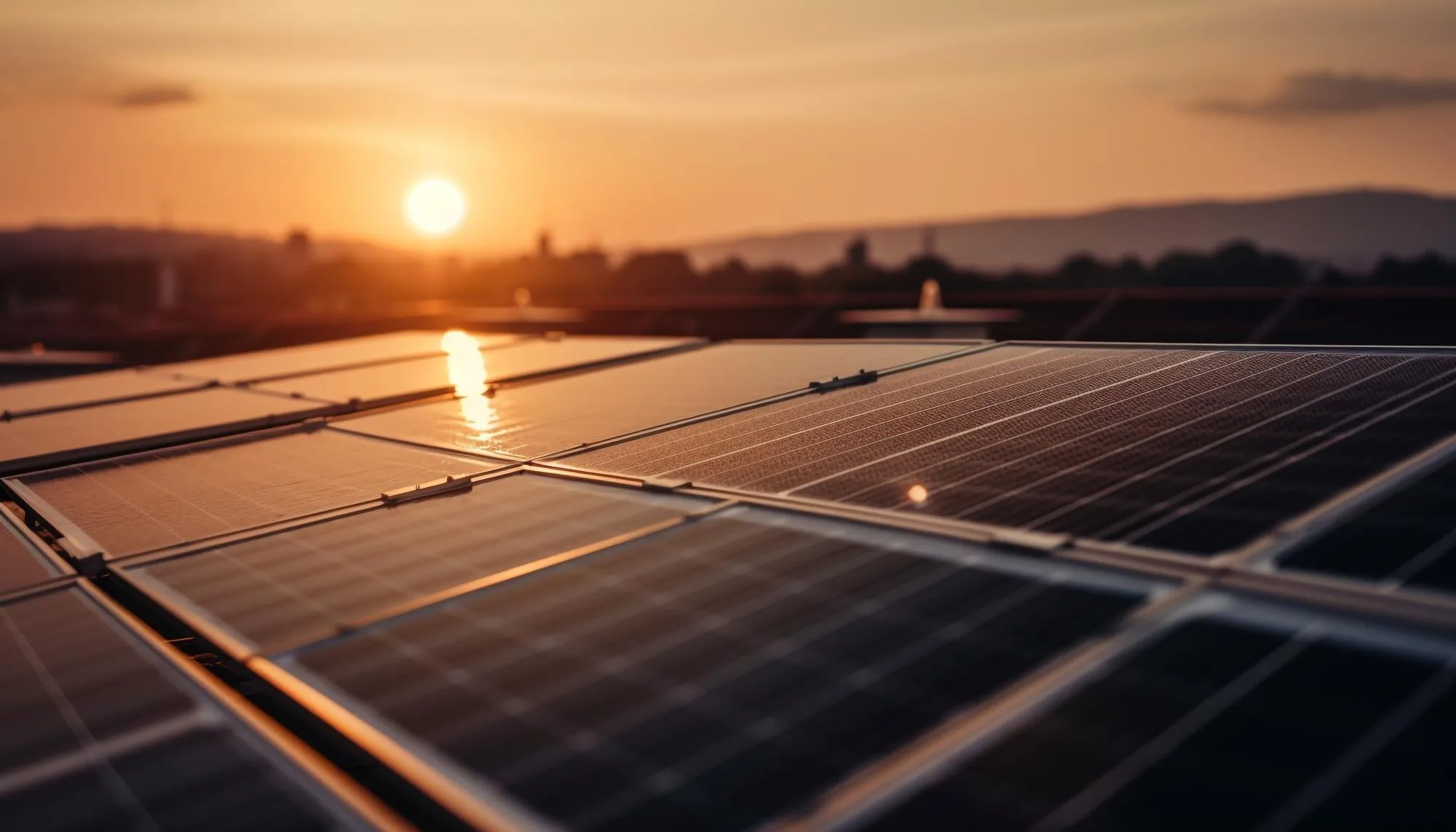
Farms sit on land, and land sits in sun. That simple coincidence makes solar pumping one of the most natural technologies in agriculture: the days that demand the most water are precisely the days the panels produce the most power.
The four building blocks
- PV array: panels on a fixed or tracking mount, sized to the pump's power demand.
- Pump controller or inverter: converts the DC from the panels, protects the pump, and tracks the array's maximum power point.
- The pump: usually a submersible for boreholes, or a surface pump for rivers and reservoirs.
- Storage tank: your battery. Pump by day into an elevated tank and irrigate by gravity whenever you like.
Sizing in three steps
1. Daily water need. Multiply crop area by daily requirement (typically 4–7 mm a day for drip irrigation) to get cubic metres per day.
2. Total head. Well depth plus tank height plus pipe friction. This decides the pump model and how hard the array must work.
3. Array wattage. Divide the hydraulic energy needed per day by peak sun hours (5 to 6 in most agricultural regions), then add roughly a quarter for losses and cloudy margins.
Storage beats batteries
A cubic metre of water in a raised tank costs a fraction of a kilowatt-hour in batteries and never degrades. Unless you must irrigate at night, pump to a tank during daylight and let gravity do the night shift.
Where solar wins outright
Beyond the reach of a grid line, the real comparison is solar versus a diesel generator with fuel hauled in by road. Against that baseline, photovoltaic pumping routinely pays for itself in a few seasons, then runs for decades on sunshine alone.