

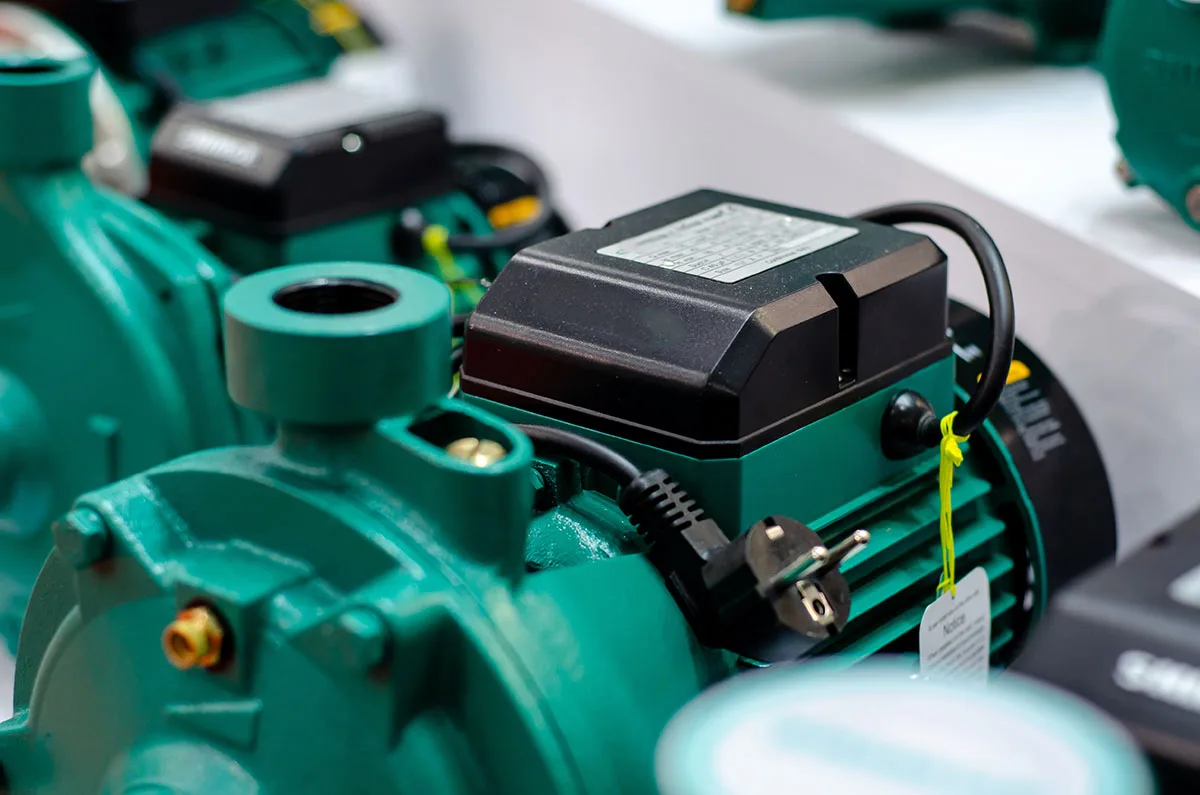
Self-priming pumps are rarely the visible part of a water system, but they are often the part that decides whether water is there when a tap opens. At Solanzo they are built around fast, reliable priming and corrosion-resistant construction, which is why they end up in homes, farms, industrial facilities and emergency systems.
Why automatic priming matters
A conventional surface pump must be primed by hand before it can run: the suction line and casing have to be filled with water, a slow job that is easy to get wrong. A self-priming pump handles this itself. It clears air from the suction line and restores full flow on its own, so restarting after a tank refill or a demand cycle needs nobody present.
In a house that means showers and appliances keep their pressure without anyone visiting the pump room. On a farm it means the pump restarts after the tank fills or demand cycles, without a trip to the wellhead. In industry it removes a whole category of avoidable downtime.
Efficiency and durability together
Paired with a variable frequency drive, a self-priming pump can cut energy consumption by up to 40%, because the motor runs at the speed the job needs instead of flat-out or off. Heavy-duty construction does the rest: corrosion-resistant alloys, precision-balanced impellers and a hydraulically shaped priming chamber that evacuates air quickly.
Typical design features across the range include quick air-evacuation channels, reinforced mechanical seals, self-lubricating components and full VFD compatibility.
Where they are used
- Residential: steady pressure for new and existing homes
- Agriculture: continuous supply for drip and sprinkler systems
- Public infrastructure: backup duty on municipal supply lines
- Industrial: process lines that need stable pressure
Built for unreliable supplies
Where the water source itself is unpredictable, a pump that reprimes itself is not a convenience. It is the difference between a system that works and one that waits for a technician. That is the job these pumps were designed for.