

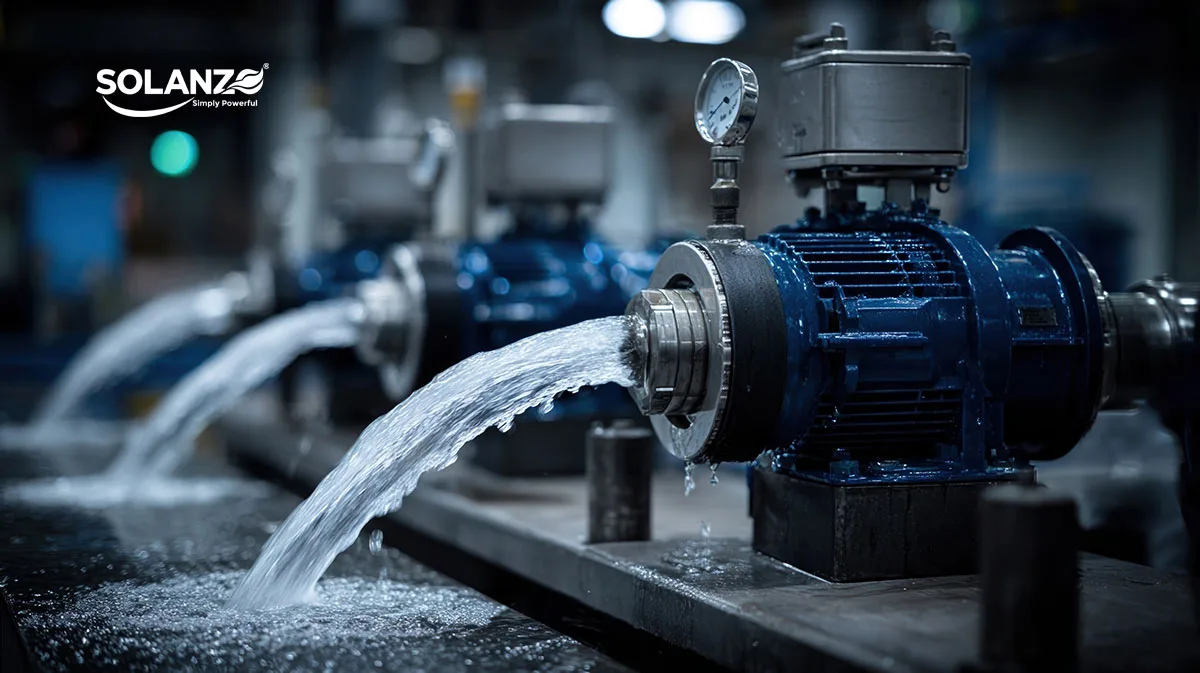
Modern water systems live and die by pressure. Whether the job is a high-rise building, a large irrigated field or an industrial process line, the pump behind it has to hold pressure steadily and efficiently. That is exactly what multistage pumping is for.
How a multistage pump builds pressure
A multistage pump places several impellers in series on a single shaft. Water enters the first stage at suction pressure and leaves each successive stage a little higher, so the final discharge pressure is the sum of every stage. The result is high pressure from a compact machine, with smoother delivery than forcing a single large impeller to do all the work.
Each Solanzo stage is machined to tight tolerances so the hydraulics stay clean: less internal recirculation, lower losses, more of the motor's power arriving as useful pressure.
Efficiency designed in, not added on
Pairing a multistage pump with a variable frequency drive can cut energy consumption by up to 40%. The drive adjusts motor speed to real-time demand, so the pump does not burn full power during low-flow periods and mechanical stress drops along with the energy bill.
The casing design also keeps acoustic output low, which makes these systems a natural fit for residential and commercial plant rooms where noise has to be controlled.
What goes into each unit
- Precision-balanced impellers for vibration-free operation
- Hydraulically optimized stage chambers that limit turbulence
- Stainless steel casings resistant to corrosion and pressure fatigue
- High-efficiency motors rated for continuous duty
- Smart VFD integration for pressure modulation and energy savings
- Thermally managed motors for sustained load
Where the demand is heading
As cities grow taller and industry pushes pressure requirements higher, dependable multistage systems become infrastructure rather than equipment. Our development work continues on hydraulics, materials and control integration to meet it.